
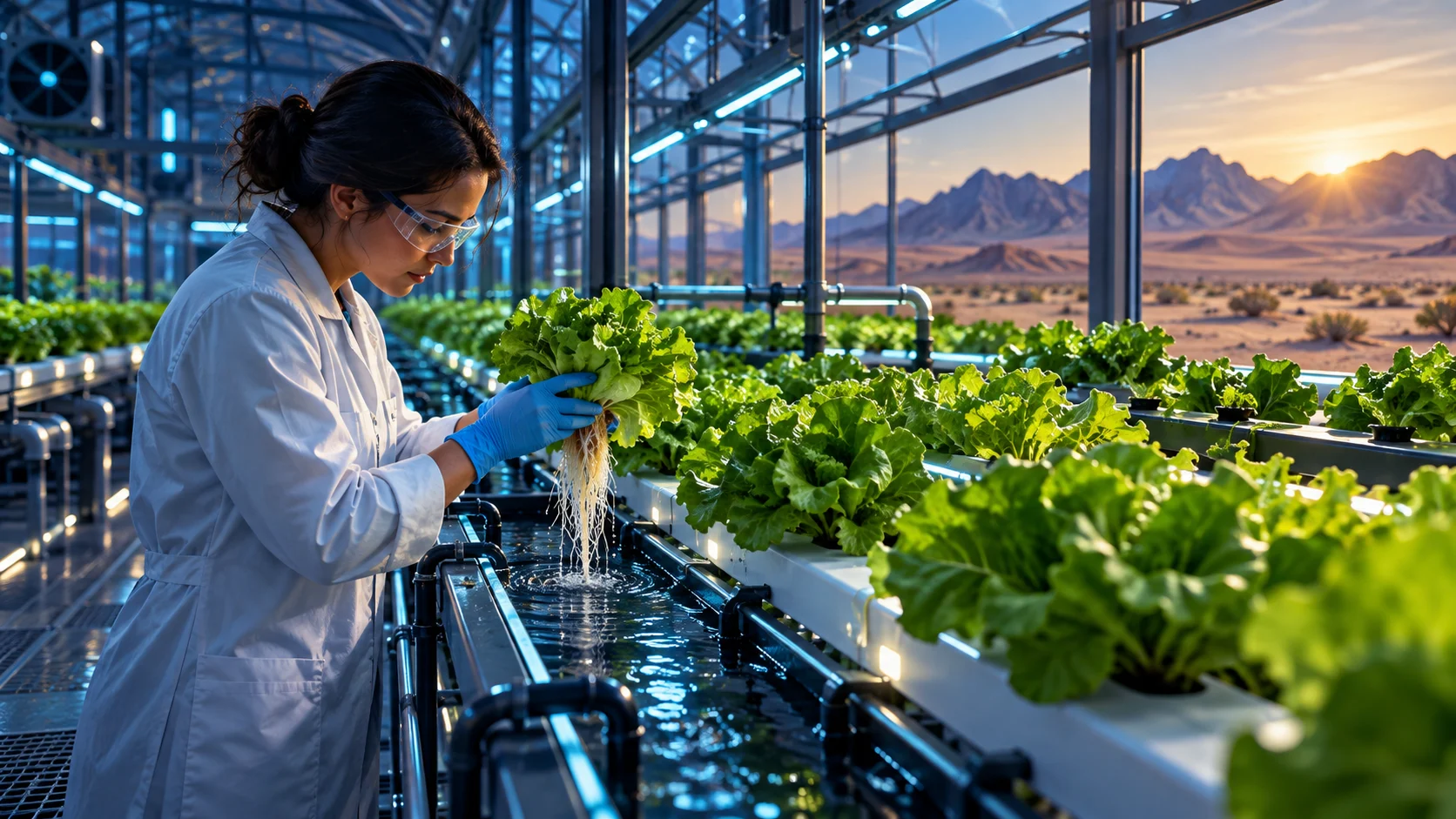
What if a farm needed much less soil—or none at all?
Hydroponics grows plants using water enriched with nutrients instead of traditional soil. Controlled-environment agriculture can also manage temperature, humidity and light. Together, these approaches offer ways to grow certain crops where outdoor conditions are challenging.
There is a trade-off. Cooling, lighting, pumps and construction require energy and money. Not every crop is suitable, and a system that saves water may still have a large energy footprint. Researchers must measure total resource use rather than judging success by appearance alone.
Farming without traditional soil
Hydroponics supplies plants with water and dissolved nutrients rather than relying on field soil. Controlled-environment agriculture can also regulate temperature, humidity and light. In principle, this allows growers to manage conditions more precisely and recycle some water. But a greenhouse in a hot climate may require substantial cooling and electricity. Growing food locally therefore involves trade-offs, not just futuristic-looking vertical shelves.
How to measure a smart farm
A meaningful comparison considers water used per kilogram of produce, energy consumption, crop quality, operating costs and reliability throughout the year. Some crops are more suitable for controlled environments than others. Qatar’s climate makes these questions especially relevant. A compelling feature could follow one hypothetical lettuce plant from seed to harvest and show where water, nutrients, sensors and cooling are used—then ask which technologies deliver measurable benefits.
The QScience takeaway
For Qatar, desert agriculture is a useful innovation question: how can we produce suitable foods efficiently while respecting the limits of water, energy and climate?