
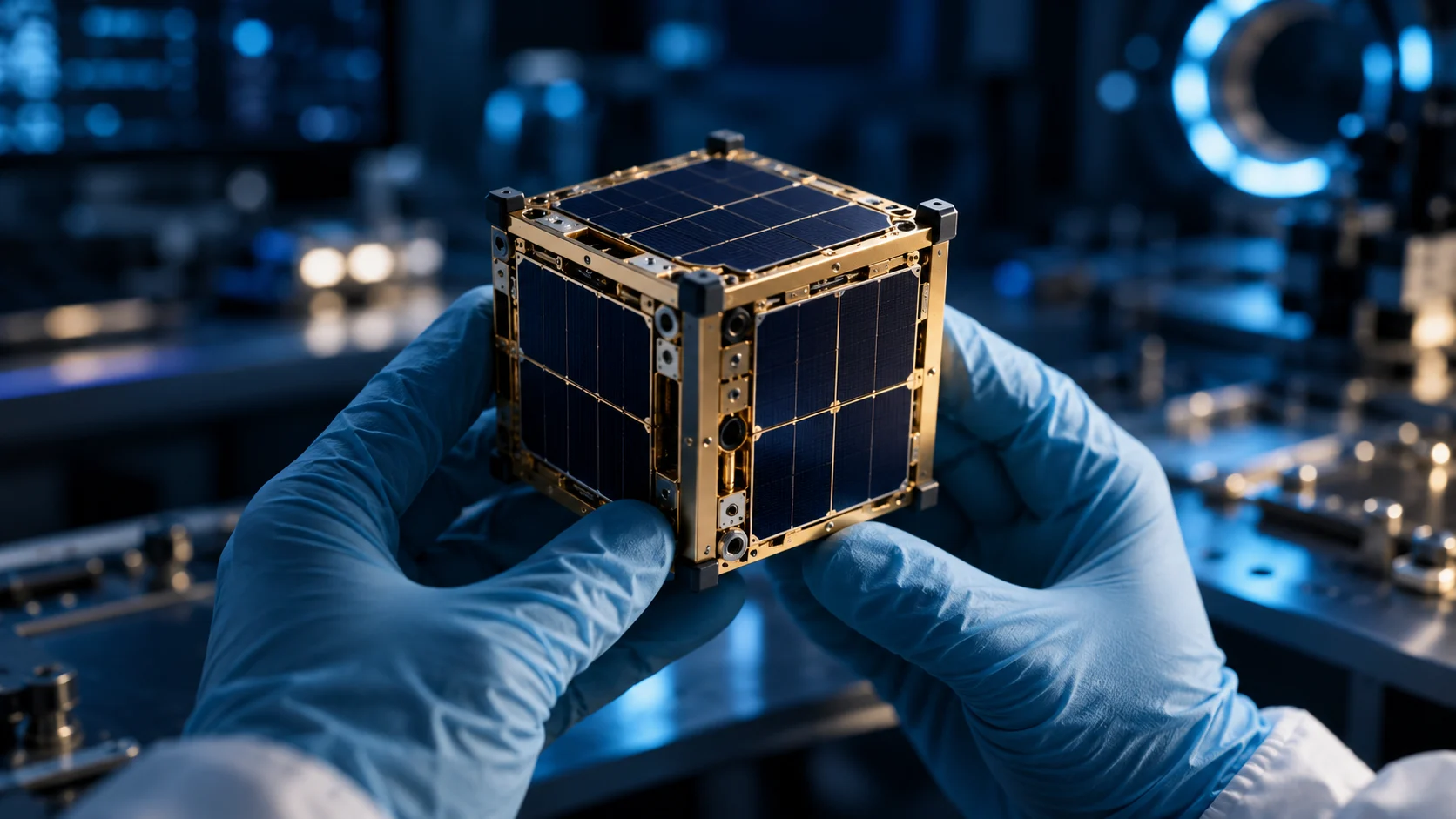
Not every satellite is the size of a bus. Some begin as a cube just ten centimeters wide.
CubeSats are small spacecraft built around standardized units. A basic 1U CubeSat is approximately a ten-centimeter cube, although its final mass and configuration depend on the mission. Standard sizes make it easier for universities and small teams to develop hardware and plan launches.
Inside that tiny volume, engineers may need to fit a computer, power system, sensors, radio and mission equipment. Solar panels produce electricity, batteries store it, and antennas allow communication with Earth. The hardest part is not making everything small—it is making everything reliable in a harsh environment.
The anatomy of a tiny spacecraft
CubeSats use standardised units that help universities and smaller teams design spacecraft around a manageable form factor. Inside that compact frame, engineers may fit solar panels, batteries, a computer, radio equipment, attitude-control components and a scientific payload. These parts compete for space and electricity. A camera that takes better pictures may require more storage, a more capable radio and additional power. Small size does not remove engineering complexity—it concentrates it.
Why small satellites changed access to space
Standardisation made it easier to test components and arrange launches, helping more educational and research teams participate. But a CubeSat still faces harsh conditions: vibration during launch, extreme temperature changes and radiation in orbit. Its limited power and short communications windows can constrain what it achieves. A useful interactive feature for QScience Hub would let readers allocate a fictional satellite’s mass and power budget, then see which scientific goals remain possible.
The QScience takeaway
Qatar University’s QUbeSat1 offers a local example of how these small platforms can turn space engineering into practical education.