
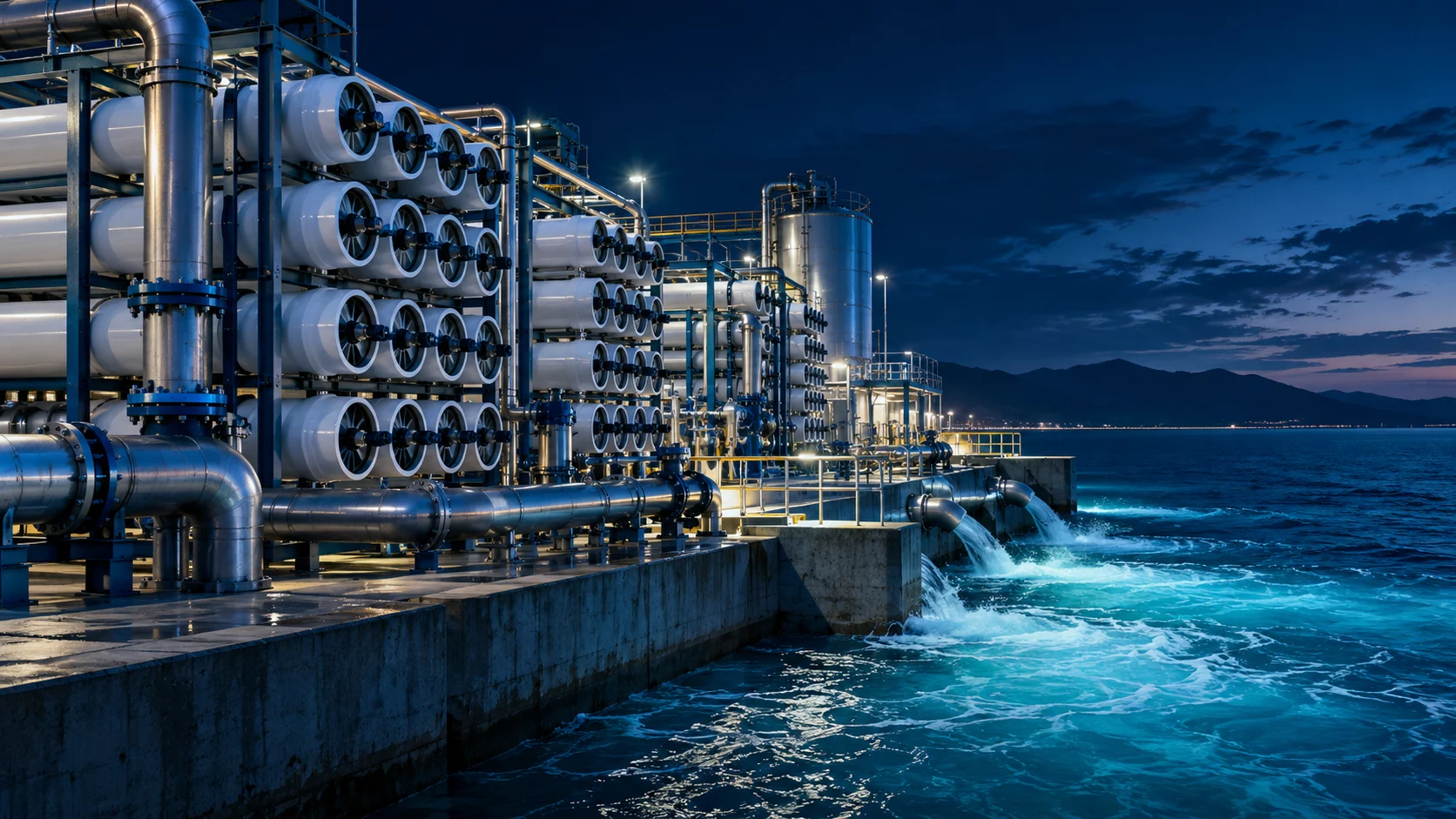
The sea contains enormous amounts of water. So why can’t we simply drink it?
Seawater contains too much salt for safe drinking. Desalination removes that salt, often using membranes in reverse osmosis systems or heat-based processes. In reverse osmosis, pressure pushes water through a membrane that blocks much of the dissolved salt. The result needs additional treatment and careful quality monitoring before distribution.
Desalination can support water supply in arid regions, including the Gulf, but it requires energy and creates concentrated salty waste that must be managed responsibly. Scientists and engineers therefore work on more efficient membranes, energy recovery and environmental protection.
The science behind a glass of water
Seawater contains dissolved salts that ordinary filters cannot remove effectively. Reverse osmosis uses pressure to push water through specialised membranes that allow water molecules through while rejecting much of the salt. Other desalination systems use heat to separate water from dissolved substances. Each approach requires energy, careful maintenance and treatment steps that make the final water suitable for its intended use.
The environmental equation
Desalination creates a concentrated salt stream that must be managed responsibly. Energy use, marine impacts and the location of intake and discharge systems all matter. Researchers investigate better membranes, energy recovery and combinations with renewable power. In a dry country such as Qatar, desalination is an excellent way to explain the connection between chemistry, infrastructure and environmental decisions. The interesting question is not only how to make fresh water, but how to do it reliably with fewer resources and impacts.
The QScience takeaway
The future of water security is not one miracle machine. It is a combination of better technology, responsible operations and using water wisely.