
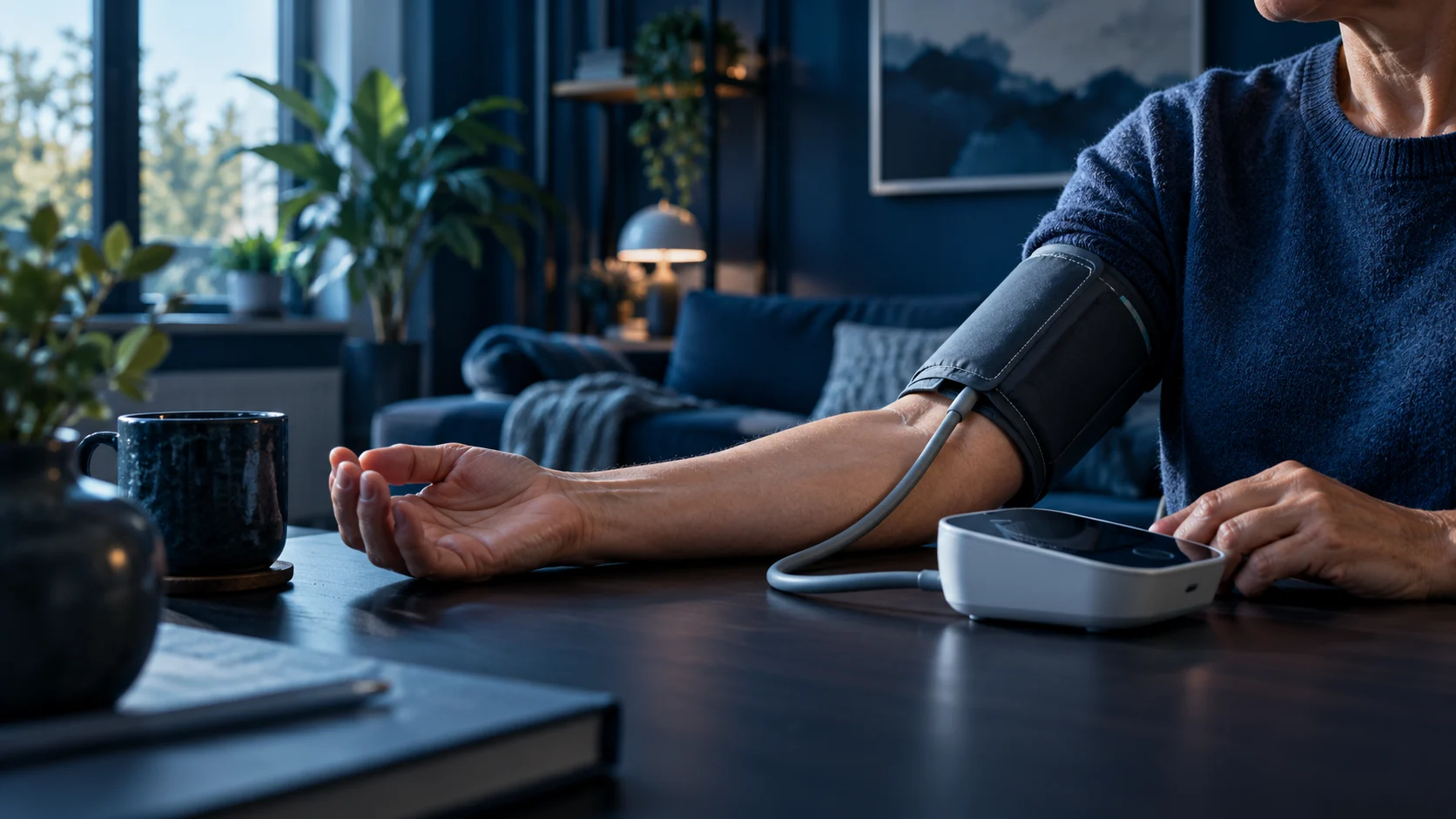
What if some hospital visits could begin with information collected at home?
Connected blood-pressure monitors, glucose sensors and wearable devices can send health measurements to clinical teams. When designed well, remote monitoring may help patients and clinicians notice changes between appointments. It can also make follow-up more convenient for people who find frequent travel difficult.
The challenge is deciding which readings are meaningful. A smartwatch alert is not automatically a medical emergency, and devices differ in accuracy. Privacy, secure transmission and a clear plan for responding to abnormal readings are essential. Without those safeguards, collecting more data can create more confusion.
A hospital without walls?
Remote patient monitoring uses connected devices to send selected measurements from home to a care team. Depending on the condition, that might include blood pressure, heart rhythm, oxygen levels or glucose trends. The most useful systems do not collect data simply because technology allows it. They define what counts as a meaningful change, who receives an alert and what happens next. Otherwise, thousands of readings can create more work without improving care.
Designing around real patients
A good system must work for someone who is older, has limited digital confidence or lives with several medical conditions. Devices need clear instructions, reliable connectivity and an accessible way to ask for help. Clinicians need workflows that prevent important alerts from being buried in noise. Privacy and informed consent matter because readings can reveal sensitive details about daily life. In Qatar, remote monitoring is an interesting topic to explore alongside existing hospital services, without suggesting that every device or programme is already available locally.
The QScience takeaway
In Qatar and other digitally connected health systems, the opportunity is to design care around patients rather than buildings—while keeping professional judgment at the center.