
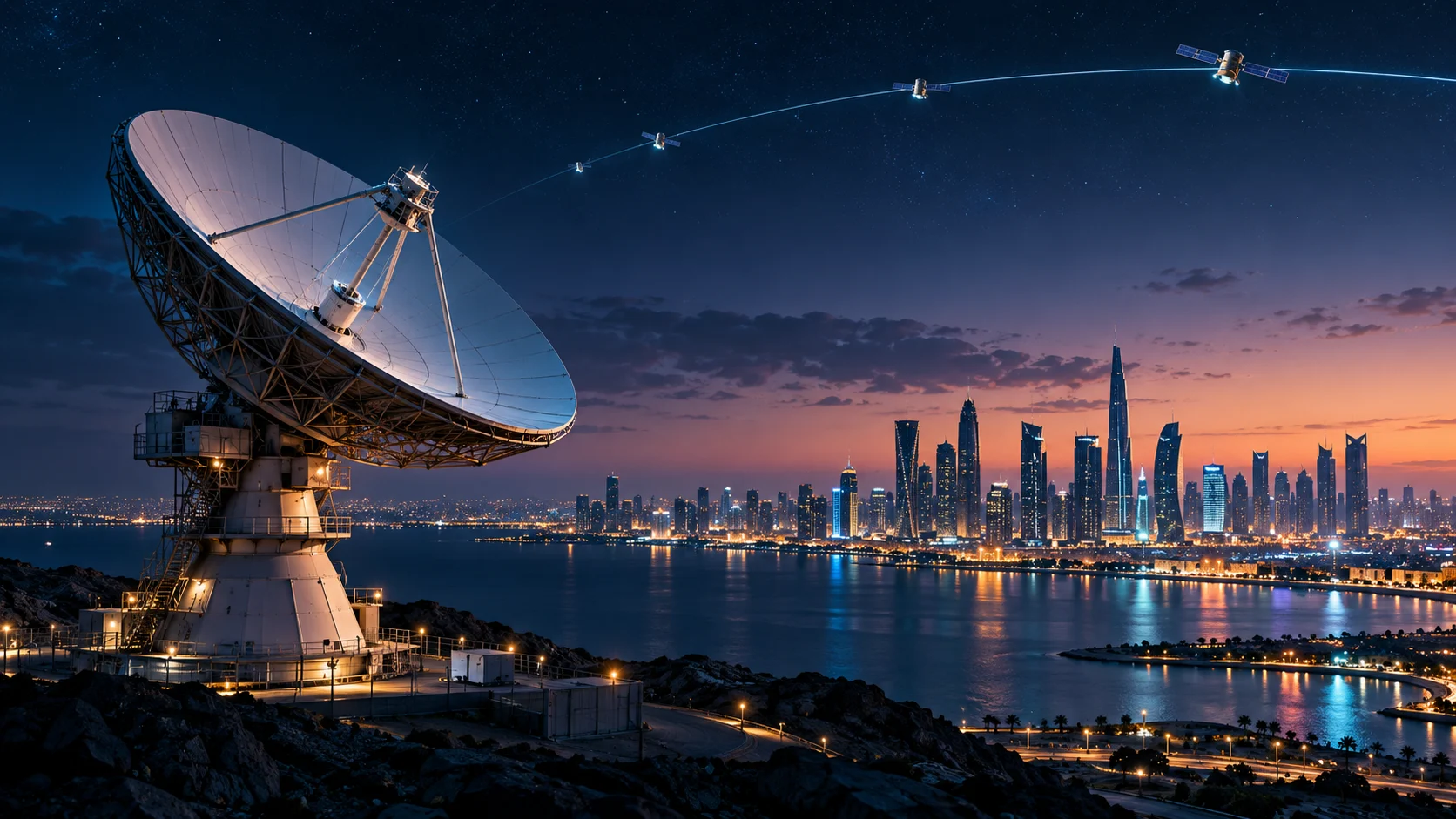
Your weather forecast, international communications and some navigation services depend on technology orbiting above us.
Satellites perform very different jobs. Some relay signals, some observe Earth and others provide timing information that supports navigation and communications infrastructure. Their orbits and instruments are chosen for the mission: a weather satellite needs different capabilities from a communications satellite.
Space systems also depend on Earth. Engineers operate ground stations, analyze incoming data and protect networks against interference. Building local expertise in these areas can support education and a wide range of technical industries.
Invisible infrastructure above our heads
Satellites support communications, navigation, weather observation and many scientific measurements. Different missions require different orbits and instruments. A communications satellite is designed around reliable signal coverage, while an Earth-observation satellite may repeatedly image the same region to study change. A navigation system depends on precise timing as well as spacecraft. These services feel effortless to users because an enormous engineering system operates behind them.
Why reliability matters
Satellite services also have limitations. Signals can be obstructed, weather can affect some communications links and space debris creates risks for spacecraft. Ground stations, backup systems and international coordination are part of the story. For readers in Qatar, satellite technology is a way to connect everyday life—communications, logistics and environmental awareness—to physics and engineering. An effective article should show both the benefits and the practical work required to maintain them.
The QScience takeaway
For readers in Qatar, satellites are not only a space story. They are also a story about engineering, connectivity and the infrastructure behind everyday life.